
History of Crawford Market
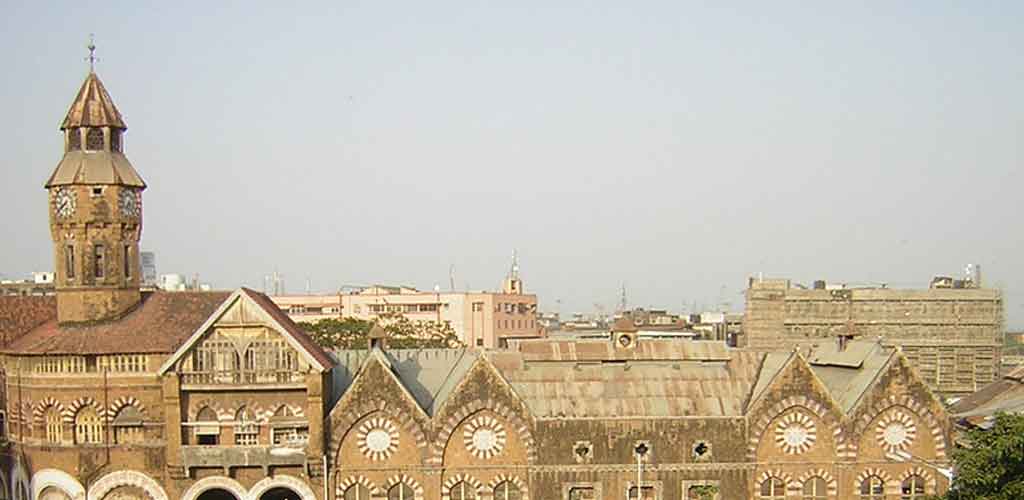
Standing as a magnificent testament to Mumbai's colonial heritage, Crawford Market (officially renamed Mahatma Jyotirao Phule Market in 2016) represents over 150 years of continuous commerce and architectural splendor. This iconic Victorian Gothic structure, completed in 1869, serves as both a functioning marketplace and a living monument to the city's transformative period under British rule.
Arthur Crawford: The Visionary Commissioner
The market bears the name of Arthur Travers Crawford (1835-1879), who became Mumbai's first Municipal Commissioner at the remarkably young age of 30, serving from 1865 to 1871. Crawford was far more than just an administrator—he was a visionary urban planner whose influence on Mumbai's development was second only to the Governor himself. His tireless efforts to improve the city's infrastructure, sanitation systems, and public facilities earned him legendary status among Bombayites.
Crawford's initials "ATC" remain carved into the market's impressive 128-foot clock tower, a permanent reminder of the man who transformed Mumbai from a collection of fishing villages into a modern metropolis. Contemporary writers of his era noted that his administrative prowess and urban planning initiatives laid the foundation for Mumbai's emergence as India's commercial capital.
Architectural Marvel by William Emerson
The market's stunning architecture was designed by William Emerson (1843-1924), the same British architect who would later create the Victoria Memorial in Kolkata. This early work shows Emerson's brilliance in adapting European architectural styles to India's tropical climate and cultural context.
Built using coarse buff-colored Kurla stone with striking red stone accents, the structure exemplifies a masterful blend of Norman and Flemish architectural styles with Gothic Revival elements. The building's design was influenced by William Burges, under whom Emerson had studied, and was actually based on Burges's stable buildings at Cardiff Castle.
Architectural Highlights:
- Clock Tower: The 128-foot high tower dominates the Mumbai skyline and was once visible from great distances
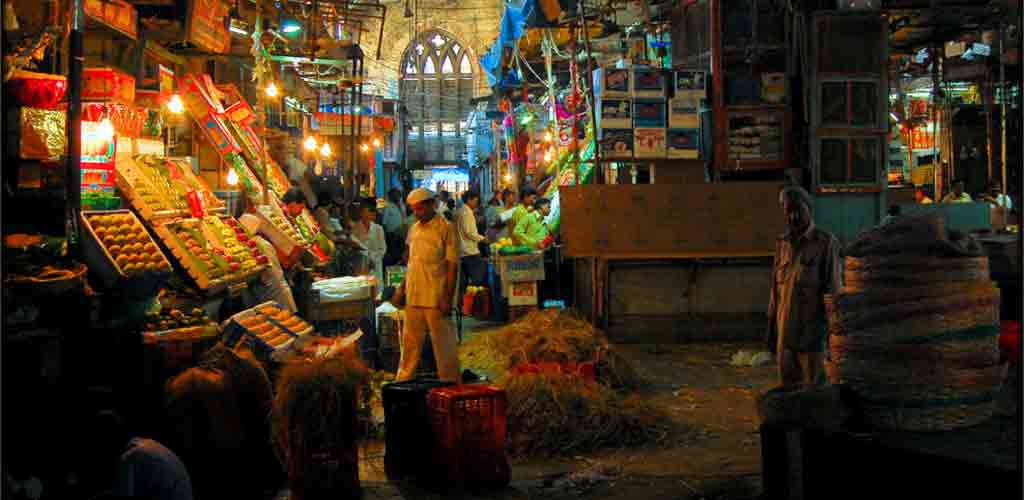
- Natural Lighting: A 15-meter high skylight awning bathes the market in natural morning light
- Ventilation Design: Wide wooden galleries and open spaces ensure the interior remains cooler than the bustling streets outside
- Three Grand Arches: Polychromatic entrance arches showcase the building's impressive scale and artistic detail
The Kipling Family Legacy
One of Crawford Market's most fascinating connections lies with the Kipling family. John Lockwood Kipling, father of the renowned author Rudyard Kipling, served as the head of the Sir J.J. School of Art in Mumbai and left an indelible artistic mark on the market.
Lockwood Kipling designed the magnificent stone fountain in the market's outer courtyard (completed in 1874) and created the intricate bas-reliefs and friezes above the entrance arches. These sculptures, depicting Indian farmers and agricultural themes, were among the largest marble sculpture projects attempted in India at the time. The April 1869 edition of Bombay Builder, a prominent journal, showered praise on Kipling's artistic achievement.
Adding a touch of historical whimsy, four-year-old Rudyard Kipling, who was born in Mumbai in 1865, likely played around the construction site as his father worked on these artistic masterpieces in 1869. The fountain also features carvings of Indian river goddesses, though these were unfortunately vandalized in later years when someone painted over them in a misguided attempt to preserve "modesty."
A Pioneering Electric Marvel
Crawford Market holds the distinguished honor of being the first building in India to be illuminated by electricity, a groundbreaking achievement in 1882. This technological milestone reflected Mumbai's position at the forefront of colonial India's modernization efforts and established the market as a symbol of progress and innovation.
From Royal Gift to Public Service
The market building was generously donated to the city by Cowasji Jehangir, a prominent Parsi philanthropist whose contributions to Mumbai's development were immeasurable. This act of civic generosity ensured that the market would serve the public interest rather than private commercial ventures.
Originally covering 22,471 square meters (with the building itself occupying 5,515 square meters), Crawford Market served as the primary wholesale hub for fruits and vegetables in South Mumbai until March 1996, when most wholesale traders relocated to the APMC market in Vashi, Navi Mumbai.
Modern Challenges and Resilience
The market has faced its share of challenges in recent decades. A major fire in November 2011 caused significant damage, requiring extensive restoration efforts. The incident highlighted both the market's vulnerability and the community's determination to preserve this historic landmark.
Between 2016-17, comprehensive restoration work was undertaken under the leadership of conservation architect Abha Narain Lambah, ensuring that future generations can continue to experience this architectural treasure. The restoration focused on preserving the building's Victorian Gothic character while adapting it for modern commercial use.
Cultural Significance and Heritage Value
Today, Crawford Market stands as more than just a shopping destination—it represents the living, breathing history of Mumbai's transformation from a colonial outpost to a global megacity. The market's Gothic spires and Victorian arches create a dramatic contrast against Mumbai's modern skyline, serving as a reminder of the city's rich architectural heritage.
The market's central location near the Chhatrapati Shivaji Terminus (formerly Victoria Terminus) creates a heritage corridor that showcases some of Mumbai's finest colonial architecture. Visitors can easily explore both landmarks in a single excursion, experiencing the grandeur of British India's architectural legacy.
For architecture enthusiasts and history buffs, Crawford Market offers a fascinating glimpse into Victorian India's ambitious urban planning projects. The market demonstrates how colonial architects successfully adapted European design principles to create structures that were both climatically appropriate and culturally significant.
A commemorative plaque on the building's exterior honors the market's construction and its continuing service to Mumbai's residents and visitors.
Visitor Tip
The best time to appreciate Crawford Market's architectural details is during the morning hours when natural light streams through the skylight awning, illuminating Lockwood Kipling's intricate stonework and the building's Gothic Revival elements. The market's design ensures it remains relatively cool even during Mumbai's hot afternoons, making it a comfortable retreat from the bustling streets outside.


